
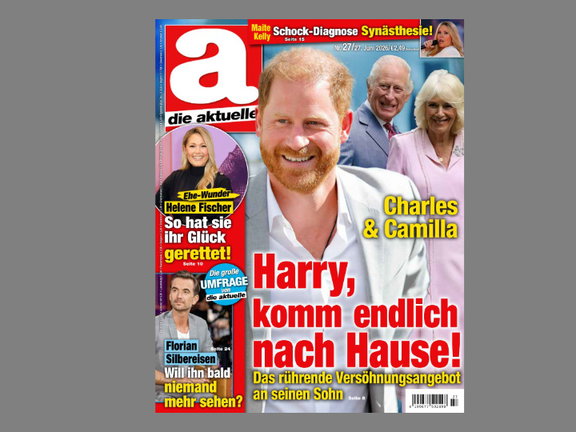
The latest analysis of a representative YouGov survey commissioned by the women’s magazine DIE AKTUELLE reveals surprising results in the German Schlager and TV landscape.
The results are sobering for entertainer Florian Silbereisen. When asked, “Which of the following people is your favorite Schlager star or favorite Schlager singer?” he received only one percent of the votes, placing him in tenth place. This leaves him significantly behind other major figures in the genre.
Silbereisen also faced a negative outcome in another category. When asked who the least likable showbiz stars were, he was voted into third place—behind Stefan Raab and Dieter Bohlen. This result points to an ambivalent public image that, despite his long-standing TV presence, is also viewed critically by the audience.
Editor-in-Chief Roland Hag interprets the results as follows: “The often-distorted figures for so-called viewership ratings do not reflect a star’s true popularity. That is why our own surveys are important indicators for us. And these facts are often sobering for celebrities as well.”
The women’s magazine DIE AKTUELLE announced that it will conduct regular, representative surveys on the popularity of German show business and pop stars in the future to continuously track developments and trends in public taste. Well over 2,000 people will be surveyed regularly nationwide for this purpose.
The complete results will be published in DIE AKTUELLE (Issue 27), available in stores starting June 27.
DIE AKTUELLE is one of Germany’s best-known magazines covering royalty, music, film, and entertainment. Features on VIPs, showbiz stars, and lifestyle are also among its core topics. Extensive articles on wellness, beauty, health, and food, as well as advice and service sections, round out the range of content. The paid circulation is approximately 160,000 copies each week. The cover price is 2.49 euros.
About the survey: The survey data is based on online interviews with members of the YouGov panel who agreed to participate in advance. A total of 2,032 people were surveyed for this study between May 6 and 8, 2026. The survey was quota-sampled by age, gender, and region, and the results were subsequently weighted accordingly. The results are representative of the resident population in Germany aged 18 and older.